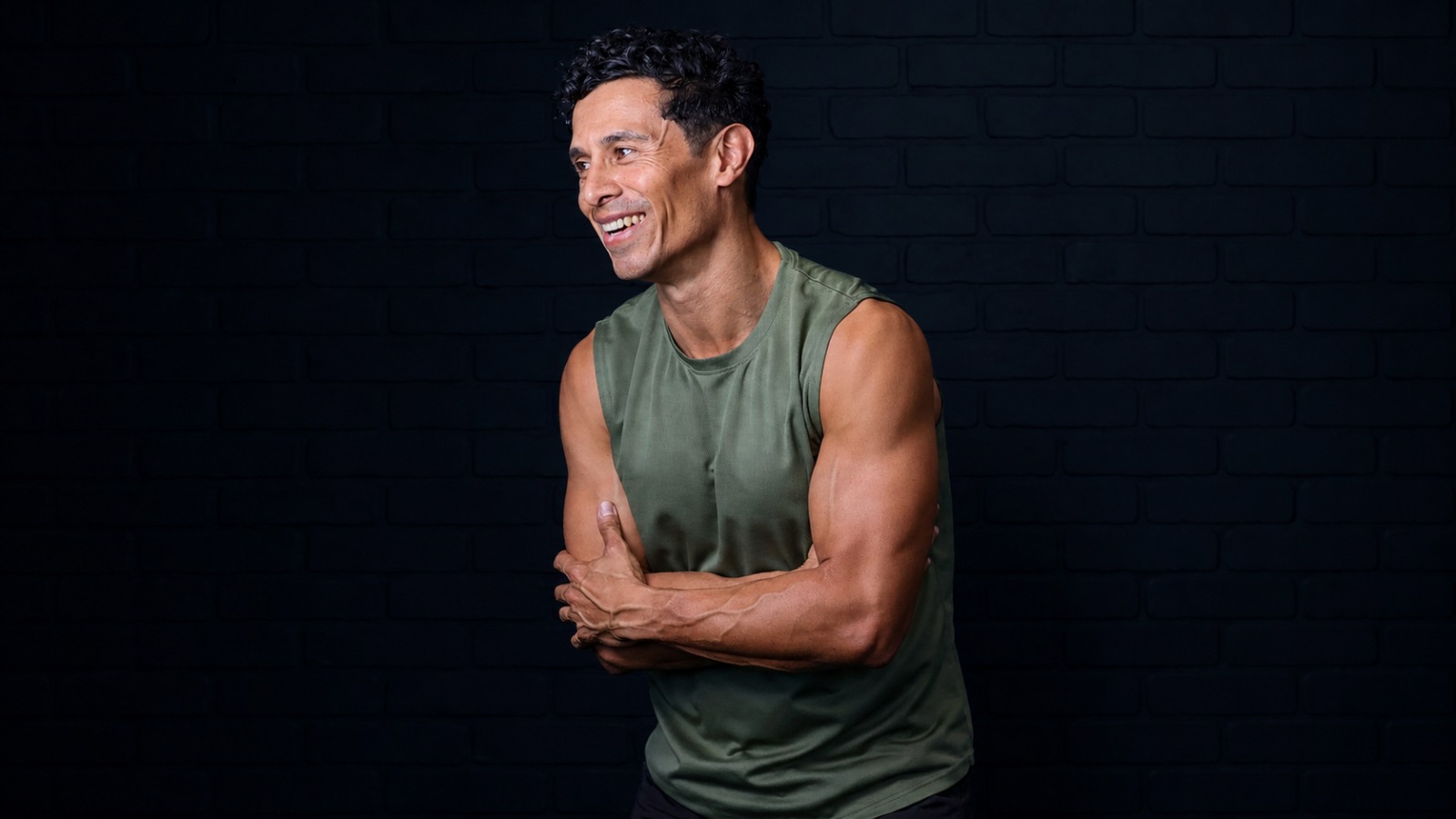
Camilo Cruz found his calling early in sports and earned a degree in physical education. His background in teaching first led him to coach children and young athletes. Later he moved into physical preparation for competitive and professional athletes. Those years shaped his philosophy for adults in a way he did not expect: athletic development belongs to every chapter of life.
“My method takes my experience coaching children and young athletes and translates it into adult life”, he explains. That insight gave rise to a philosophy centered on sustainability. “I realized that training is an essential part of every human being at any stage of life, so my intention is for people to feel like athletes throughout their entire existence: teaching them how to train, and how to feel strong, healthy, sound, and vital”, he reflects.
The thirties and forties as a turning point
The fitness industry is driven by extreme challenges. Cruz works instead with adults from their mid-thirties into their sixties. He sees the thirties and forties as the ideal window to start building physical capability, without endless routines or drastic sacrifices.
“Why start in your thirties or forties? Because it is the right stage to train the body and understand it”, he says. “There are no impossible workouts; there only needs to be an appropriate methodology to help you realize that your physical capacities are there and learn how to enhance them”. For those who start later, the principle still holds: capacity can be built at any age. “If we start in our thirties or forties understanding our bodies better and training well, we will stay strong and athletic at sixty, seventy, or eighty”, he adds. “We are athletes for life”.
Nutrition follows the same standard and avoids severe restrictions. “There are no extreme diets in my program, because food must be part of a person’s daily, integral routine”, he notes. “The idea is for people to learn how to eat, understand which foods serve them, and integrate them into daily life. Nothing extreme works; the goal is balance and equilibrium”.
Power first
Cruz structures his training around athletic versatility rather than isolated muscle building. “My methodology is extrapolated from my experience as an athletic coach with youth and competitive athletes”, he says. Hypertrophy and strength matter, but they are only part of the physical spectrum.
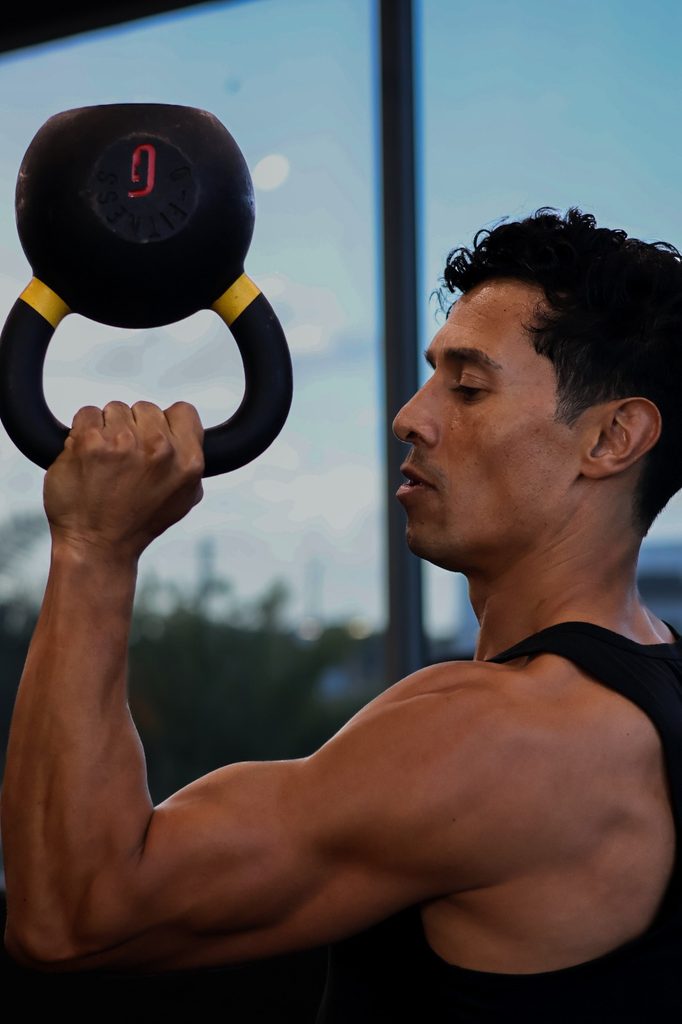
“I don’t just work on strength and hypertrophy, which is very important, but also other expressions of strength: endurance strength, speed, and power”, he points out. Power sits at the center of his method. “Power is the first physical quality we lose with age, faster than strength”, Cruz says. “So we train it first, to maintain it and, depending on age and starting point, to improve it”.
His program rests on four pillars: functional strength, power, cardiovascular health, and mobility. Strength training is central to injury prevention. Mobility and core stability support quality movement and help strength transfer efficiently. Progress is measured, not assumed. Cruz developed the Long-Lived Fit Functional Health Test, an eight-test battery that assesses aerobic capacity, general strength, grip strength, mobility, coordination, and balance. He also applies the method to himself. Cruz trains and competes in Hyrox, and his own performance is public proof of the philosophy he teaches.
Patience as an entrepreneurial standard
Promoting multi-year development is hard in a market built on instant gratification. “It has certainly been a challenge to project my program for the long term, because on social media everything is sold as immediate, and reality is different”, he acknowledges. Lasting health takes time, and his clients become informed partners in the process. “The challenge has always been making people understand that this is not about eight weeks, but about long-term thinking: seeing yourself in one year, in two”, he reflects.
His advice for coaches who want to build independently is practical: “The first thing is to define your market niche very clearly, knowing what audience you want to train, and identifying the needs of that niche to offer an efficient program that solves a concrete problem”, he concludes.
Follow the movement: @coach_camilo_cruz | @long_lived_fit